
Our Verdict
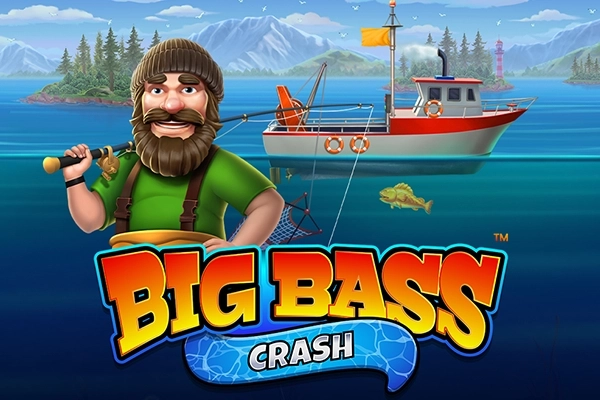
Big Bass Crash is a well-built crash game from Pragmatic Play that suits players who want something faster and more decision-driven than a standard slot. The fishing theme is light and fun without getting in the way of the actual game. At 95.5% RTP, it sits close to the industry average for crash games, and the core mechanic is simple enough to pick up in one session.
That said, this game is not for everyone. The pace is relentless, the variance is real, and a bad run can drain a bankroll faster than you might expect. If you're looking for long, relaxed sessions with low swings, this probably isn't your game. But if you're comfortable with risk, enjoy making quick decisions, and can stick to a plan, Big Bass Crash in Canada is a solid choice among crash titles available on licensed platforms.
Bottom line: it's a legitimate, playable game with fair mechanics. Just go in with your eyes open.
What We Like and Don't Like
Pros
- Simple mechanic that's easy to learn. No complicated bonus rules or confusing paytables.
- 95.5% RTP is competitive for a crash-style game and is publicly disclosed by Pragmatic Play.
- Auto cash-out feature lets you set a target multiplier in advance, which removes some of the emotional pressure from each round.
- Available on well-known, licensed Canadian platforms including Betway guide, Unibet, 1Win, and Stake.
- Runs smoothly in a mobile browser without needing to install anything.
Watch-outs
- The pace is fast. Rounds can end in seconds, which makes it easy to lose track of how much you've wagered in a short period.
- High variance means long losing streaks are entirely normal, even with a mathematically fair game. Don't mistake a bad session for a broken game.
- The crash format is psychologically intense. The temptation to hold on just a little longer is built into the experience, and that's where discipline breaks down.
- RTP of 95.5% still means a 4.5% house edge. Over time, the house wins. That's not a flaw, it's just the math.
RTP, Odds and What They Actually Mean
RTP stands for Return to Player. Big Bass Crash carries a 95.5% RTP, which means that over millions of rounds, the game is designed to return $95.50 for every $100 wagered in total. The remaining $4.50 is the house edge. That's it. Simple math, but it's often misunderstood.
What RTP is not: a promise for your session. If you sit down with $100, you will not walk away with $95.50. You might double up. You might lose everything. RTP is a long-run statistical average, not a round-by-round guarantee. Your individual session could land anywhere on that curve. Treating RTP as a safety net is one of the most common mistakes players make.
The table below shows approximate probabilities for the multiplier reaching certain levels, along with example payouts on a $10 bet. These figures are illustrative and based on typical crash game probability models. Actual values may vary depending on the specific round outcome generated by the game's RNG.
| Target Multiplier | Approximate Chance of Reaching | Example Payout on $10 Bet |
|---|---|---|
| 1.2x | ~83% | $12.00 |
| 1.5x | ~65% | $15.00 |
| 2x | ~48% | $20.00 |
| 3x | ~32% | $30.00 |
| 5x | ~19% | $50.00 |
| 10x | ~9.7% | $100.00 |
Read that table carefully. Cashing out at 1.2x sounds boring, but it hits roughly 83% of the time. Waiting for 10x? You'll be right about one in ten rounds. Neither approach is wrong, but each has a very different risk profile. The house edge applies across all of them.
Variance is the other side of this coin. Even if you play a mathematically perfect strategy, you'll hit stretches where the game crashes at 1.01x five times in a row. That's not the game cheating you. It's normal statistical variance, and it can be brutal in short sessions. The higher the multiplier you're chasing, the wilder those swings will be.
Fairness and Round Independence
Pragmatic Play uses a certified Random Number Generator (RNG) to determine outcomes in Big Bass Crash. This RNG is tested and audited by independent third-party labs, which is a standard requirement for any operator licensed under iGaming Ontario and the AGCO. The crash point for each round is calculated before the round begins, not in response to when players cash out. The game doesn't know what you're going to do, and it doesn't adjust based on your history.
Each round is completely independent of every other round. There are no patterns. There are no hot streaks or cold streaks in any meaningful sense. If the game crashed at 1.1x ten times in a row, the eleventh round still has exactly the same probability distribution as any other. That's how independent random events work. Past results carry zero predictive weight for future outcomes.
This is also why predictor myths deserve scrutiny: no app, tool, or signal service can tell you when the game will crash, because that information doesn't exist in advance in any accessible form. If someone is selling you crash predictions, they're selling you fiction. Stick to verified platforms and trust the audit trail, not third-party claims.
Volatility and What It Feels Like
High variance doesn't just mean big wins are possible. It means big losses are equally possible, and they can happen fast. A $200 bankroll played at $10 per round can be gone in under three minutes if the game keeps crashing early. That's not a worst-case horror story. That's a realistic outcome in a high-volatility crash game. The speed of play amplifies everything: wins feel great and come quickly, but losses stack up just as fast.
The pace is worth thinking about separately from the math. Crash games run much faster than slots. Rounds can resolve in three to fifteen seconds. That rhythm can blur your sense of time and money. You might not notice how many rounds you've played until you check your balance. It's not a design flaw, but it is a real risk factor that you should account for before you start. Setting a round limit, not just a dollar limit, is one of the more practical ways to stay grounded. Check the strategy guide for session planning approaches that actually make sense.
Mobile Experience
Big Bass Crash runs in your mobile browser without needing a separate download or app install. The interface scales cleanly to smaller screens, and the core controls (bet amount, auto cash-out, the cash-out button itself) are large enough to use comfortably on a phone. It holds up reasonably well on mobile data, though a stable connection is always better for a game where timing matters. The mobile guide covers platform-specific setup in more detail if you want it.
One practical note: because rounds are fast, playing on mobile in a distracting environment can make it harder to stay disciplined. The game doesn't care where you're playing, but your decision-making does. A noisy commute is probably not the best place to manage a crash game session.
Who Should Play Big Bass Crash
This game works best for players who genuinely enjoy fast, decision-based gameplay and are comfortable with the idea that most sessions will involve losing rounds. If you like the feeling of setting a target and deciding in real time whether to hold or fold, the crash format delivers that in a clean, uncomplicated way. Players who can set a budget, stick to it, and walk away when it's gone will get the most out of what Big Bass Crash offers.
Skip it if you know you're prone to chasing losses, if you find losing streaks genuinely distressing, or if you prefer games with more predictable outcomes and slower pacing. There's no shame in that. Crash games are psychologically demanding in ways that slots or table games aren't. Knowing that about yourself before you start is the most useful thing you can do. Must be 19+ to play. If gambling is affecting you, contact ConnexOntario at 1-866-531-2600.